i18n: How 6 languages attracted 60% of my traffic
60% of my traffic comes from visitors who don't speak French. The short answer: I translated my app and website into 6 languages even before having any users, and it became my primary acquisition channel — without spending a dime on advertising.
TAMSIV is a French voice-powered task manager app, built by a solo developer. Yet, when I opened Google Analytics after 41 days, France accounted for less than half of the traffic. Germany is my third-largest market. Spain is growing. Brazil is appearing. All this without publishing a single post in German, Spanish, or Portuguese.
In this article, I detail exactly how I set up internationalization (i18n), what data I observed, and why you should probably translate your product much earlier than you think.
Key takeaways
- 60% of traffic comes from non-French speakers, with no targeted marketing
- Germany accounts for 13% of traffic — third market, zero marketing effort in German
- Translating before launch is a friction reduction strategy that opens up markets for free
- Near-zero cost: automated translation via AI (OpenRouter) + manual review
- Two main levers: localized Play Store + multilingual website with hreflang and translated slugs
- The ROI of i18n is disproportionate for an indie hacker with zero marketing budget
Why translate an app even before having users?
Most indie hackers translate later. When they have traffic, when they've validated product-market fit, when they have the budget for a translator. i18n is "polish" — a nice-to-have that you do later.
I did the opposite. In February 2026, two weeks before the first alpha release, I implemented next-intl on the website and an automatic translation system on the mobile app. French, English, German, Spanish, Italian, Portuguese. Six languages from day 1.
The reasoning was simple and based on a principle every marketer knows: friction kills conversions. If someone lands on the Play Store looking for "voice task manager" in German, and the listing is only in English, they'll leave. If the listing is in German, they'll click. Translation is about reducing friction at every touchpoint.
According to a study by CSA Research, 76% of online consumers prefer to buy products with information in their native language. And 40% will never buy from a website in another language. These figures are even more significant for a productivity app where the user needs to immediately understand what the product does.
How did I implement i18n in 6 languages on Next.js?
The technical implementation relies on three pillars. I detailed the complete process in a dedicated article on i18n in 9 steps, but here's a summary.
1. next-intl for the website
next-intl is the library I use for localized routing on Next.js. Each page exists in 6 distinct URLs: /fr/, /en/, /de/, /es/, /it/, /pt/. hreflang tags are automatically generated in the <head> to tell Google which version to serve to which audience.
Important point: the slugs themselves are translated. The article you are reading now has a different slug in German (/de/blog/i18n-akquisitionskanal-6-sprachen) and in Spanish (/es/blog/i18n-canal-adquisicion-6-idiomas). This may seem like a detail, but for SEO, it makes a real difference — Google understands that the page is truly in the target language, not just a copy with a locale prefix.
2. Automated translation via OpenRouter
I can't afford to pay a professional translator in 5 languages. Instead, I use an AI pipeline based on OpenRouter (the same LLM that powers TAMSIV's voice assistant) to generate initial translations. A script goes through the JSON message files and HTML content, translates them, and then I perform a quick manual review.
The cost? Almost zero. A few cents in tokens per article translated into 5 languages.
3. Localized Play Store in 6 languages
In March 2026, I translated the Play Store listings — title, short description, long description — into all 6 languages. Each language has its own optimized keywords. A German searching for "Sprachgesteuerte Aufgaben-App" finds TAMSIV. A Spaniard searching for "gestor de tareas por voz" does too.
This is an often underestimated lever: localizing the store listing is the equivalent of an SEO campaign on a search engine with high purchase intent.
What concrete data after 41 days of multilingual traffic?
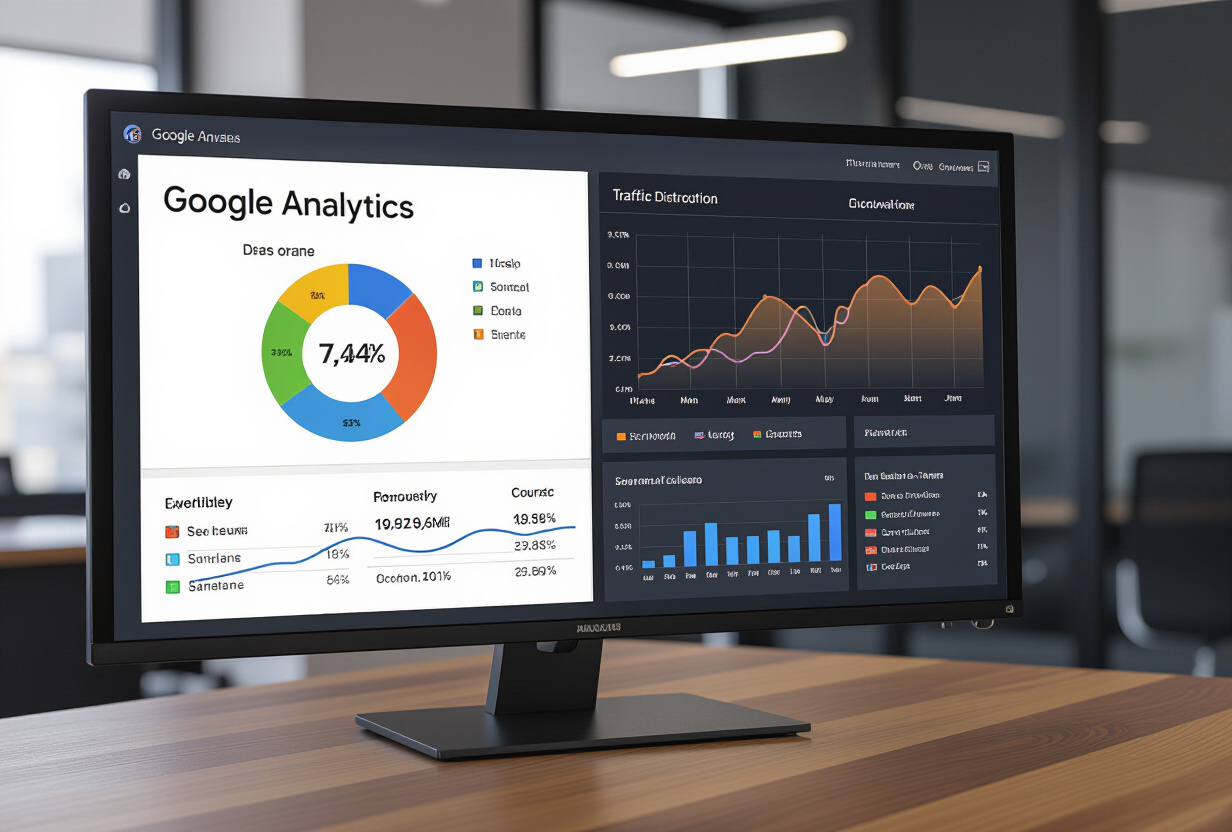
Here are the raw Google Analytics figures for a representative week (1,142 unique visitors):
| Country | Flag | % of traffic |
|---|---|---|
| France | 🇫🇷 | ~40% |
| United States | 🇺🇸 | ~18% |
| Germany | 🇩🇪 | ~13% |
| Spain | 🇪🇸 | ~8% |
| Brazil | 🇧🇷 | ~5% |
| Italy | 🇮🇹 | ~4% |
| Other | 🌐 | ~12% |
The most striking figure: Germany accounts for 13%. I have never published a single post in German. Not a tweet, not a LinkedIn article, not a Reddit comment. Zero targeted marketing effort. And yet, Germans are arriving — because the Play Store listing is in German, the website is in German, and Google sends them to pages in their language.
To put this in perspective: if I had wanted to generate 13% of my traffic from Germany with paid advertising, it would have cost me hundreds of euros in Google Ads or Meta Ads. Translation cost me a few cents in AI tokens.
Where exactly do these international visitors come from?
Two main sources feed this organic multilingual traffic:
1. The localized Play Store. Every search on the Play Store is performed in the user's language. A German searches for "Sprachgesteuerte Aufgaben-App", not "voice task manager". By localizing Play Store metadata (title, short description, long description) with language-specific keywords, TAMSIV appears in local search results. This is multilingual ASO (App Store Optimization), and it's the mobile equivalent of SEO.
2. The multilingual website indexed by Google. Each page on tamsiv.com exists in 6 distinct URLs with correct hreflang tags. Google Search Console shows that German pages rank for German queries, Spanish pages for Spanish queries. The Next.js architecture with localized routing does the job naturally.
The traffic is not viral. There hasn't been an exploding post. It's organic, slow, steady traffic — the kind that builds up when every page of your site speaks the visitor's language. And that's exactly the most valuable type of traffic for an indie project.
What's the hidden surprise in the iOS data?
TAMSIV is Android-only. No iOS version. And yet, Google Analytics shows 12 clicks from iOS devices to the download page.
What does this mean? People land on the site from their iPhone, are interested enough to click "Download", and discover it's Android only. These are 12 lost potential users — and a strong signal that iOS demand exists.
These micro-signals in analytics are valuable. They don't justify an immediate iOS port (it's a massive investment for a solo dev), but they inform the roadmap. When the time comes to decide the next big step, these 12 clicks will weigh in the balance.
Why is i18n the best ROI for a solo dev with no budget?
Let's compare classic acquisition channels for an indie hacker:
| Channel | Cost | Time to results | Effect duration |
|---|---|---|---|
| Google/Meta Ads | $$$ / month | Immediate | Stops when you stop paying |
| Content marketing | Time (a lot) | 3-6 months | Long term |
| Social media | Daily time | 1-3 months | Requires constant activity |
| i18n / Localization | Almost zero (AI) | 2-4 weeks (indexing) | Permanent |
| Referral | Initial dev | Depends on user base | Exponential if it takes off |
i18n stands out because it's a one-shot investment with permanent returns. Once translations are in place and pages are indexed, traffic arrives without intervention. No need to publish daily, no need for recurring budget, no need to follow an algorithm that changes every month.
For a solo dev juggling code, marketing, and support, this is time saved. I detailed the referral system and onboarding in other articles — i18n amplifies each of these levers by opening new markets.
What mistakes to avoid when localizing a product?
After localizing TAMSIV into 6 languages, here are the pitfalls I've identified:
1. Translating only the interface, not the marketing. Many developers translate their app but forget the website, store listing, and blog. It's like opening a store in a foreign country but leaving the sign in your language. Localized marketing — pages with hreflang, translated store listing, multilingual blog — is what attracts traffic.
2. Using the same keyword structure for all languages. "Voice task manager" in English doesn't translate word-for-word into German. Germans search for "Sprachgesteuerte Aufgaben-App" or "Aufgabenmanager mit Sprachsteuerung". Each language has its own search patterns, and keywords need to be adapted — not just translated.
3. Neglecting URL slugs. A French slug on a German page is a negative signal for Google. Translated slugs improve both CTR in SERPs and ranking, because Google better understands the linguistic relevance of the page.
4. Blindly trusting AI translation. LLMs are excellent for technical translations, but they can miss cultural or idiomatic nuances. My rule: AI generation + quick manual review. For critical pages (landing page, store listing), I spend more time on the review.
5. Forgetting multilingual technical SEO. hreflang tags, sitemap.xml with alternates, correct canonical on each language version — all of this must be in place for Google to index and serve the right pages. Without it, you risk content duplication and cannibalization between your own pages.
How to replicate this strategy for your own product?
Here's a concrete action plan if you want to launch your product in multiple languages:
Step 1 — Choose your languages strategically. Don't translate into 20 languages at once. Analyze where your potential users are. For TAMSIV, I chose the 6 most spoken languages in Europe (excluding Russian and Turkish, too culturally different for an MVP). English is mandatory, then target 3-5 languages with a strong Android market.
Step 2 — Localize the store listing first. This is the fastest lever. Translate the title, short description, long description, and release notes. Google indexes store listings in a few days. I used the Play Store localization tools combined with AI translations optimized for each market.
Step 3 — Implement localized routing on your website. With Next.js and next-intl, it's relatively simple. The important thing is to have distinct URLs per language (no automatic IP detection, which prevents Google from indexing). Add hreflang tags and a sitemap with linguistic alternates.
Step 4 — Translate marketing content progressively. Start with high-conversion pages (landing, pricing, features), then the blog. Each new translated article is a new organic entry point into a new market.
Step 5 — Measure and iterate. Track traffic by country in Google Analytics and impressions by language in Search Console. Adjust store listing keywords based on real data.
What this means for TAMSIV's future
The lesson from these 41 days is brutally simple: i18n is not polish. It's an acquisition channel.
Each added language is a new market opened. No need for advertising campaigns, no need for local influencers, no need for a budget. Just correct translations, clean URLs, and time for Google to index.
For a solo dev with zero marketing budget, this is probably the best possible ROI. The cost of translation (automated via OpenRouter + manual review) is almost zero. The return — 60% of traffic — is disproportionate.
Next steps? Continue to enrich multilingual content, optimize keywords by language based on Search Console data, and potentially add new languages when the data justifies it. The free alternative to classic tools that TAMSIV represents has a much larger market than France alone — and the data proves it.
FAQ — Internationalization and multilingual acquisition
How long does it take for Google to index multilingual pages?
In my experience with TAMSIV, new localized pages started appearing in search results 1 to 3 weeks after going live. Play Store listings are indexed even faster, in a few days. Adding an XML sitemap with hreflang alternates and submitting it to Google Search Console speeds up the process.
Is AI translation sufficient or do you need a professional translator?
For an MVP and an indie hacker, AI translation (LLM like GPT-4, Claude or via OpenRouter) is largely sufficient — especially for technical content. My method: AI generation + quick manual review. For very high-conversion pages (main landing page, store listing), investing in a native review is recommended. But for the blog and secondary pages, AI does a perfectly adequate job.
Which languages should be prioritized for localizing an Android app?
For the European market, I recommend: English (mandatory), German (very strong Android market), Spanish (Spain + Latin America), Portuguese (Brazil = huge Android market), and Italian or French depending on your original market. German is often underestimated but it's TAMSIV's third market — Germans search in their own language and competition is often lower than in English.
Are hreflang tags really necessary?
Yes, absolutely. Without hreflang, Google may consider your multilingual pages as duplicate content and penalize your ranking. hreflang tags tell Google which version of the page to serve based on the user's language and region. This is also what makes the correct result appear in local SERPs. On Next.js with next-intl, implementation is relatively simple — the framework automatically generates the tags in the <head>.
What is the real cost of localization for an indie hacker?
With AI translation, the financial cost is negligible — a few cents per article translated into 5 languages. The real investment is time: the initial setup of the i18n system (routing, message files, translation pipeline) took me about a week. But once in place, each new piece of content is translated in a few minutes. The ROI is phenomenal: for an initial investment of one week, I gained 60% additional traffic permanently.